



History
Discover the rich history of Goat Square House and its significance in Tanunda through the 19th century.
Outline
- • An Initial History of Goat Square House
- ◦ Origins and Early Development
- ◦ Architectural Features
- ◦ Extensions and Alterations
- ◦ Ownership History
- ◦ Recent Ownership and Preservation Efforts
- • Historic Photos
- • Further Reading and Documentation
An Initial History of Goat Square House
The house at 33-35 Goat Square is one of the oldest houses extant in the Barossa Valley. Estimates by the South Australian Heritage Commission put its construction in the late 1840s or very early 1850s, and its importance to state and national domestic architecture is indicated by its listing on both the National Estate Register and the State Heritage List. The listings were on the recommendation of the National Trust.
Origins and Early Development
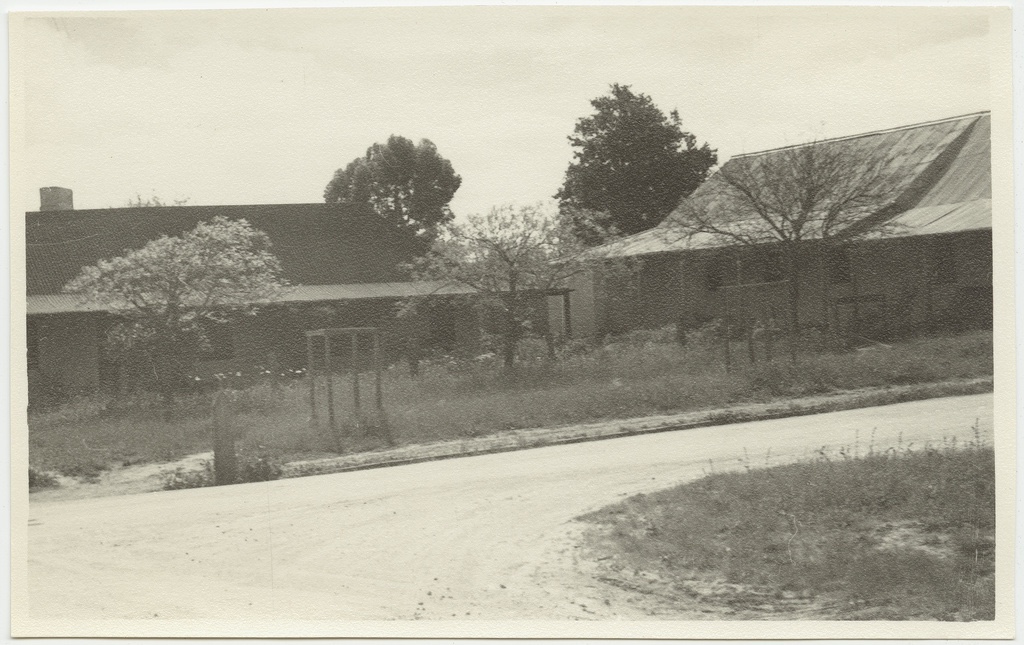
The house was one of a group, including the adjoining, similar but smaller Rieschiek house (dated at 1850), built around Goat Square soon after it was laid out as the original market square of Tanunda by Charles Flaxman, who was George Fife Angas’s supervisor of the Silesian German migrants brought to the Barossa Valley after emigrating with Pastor Kavel.
Flaxman began the subdivision in 1843 and Goat Square was the centre of the layout, so it would be expected that this house would have been one of the earliest built.
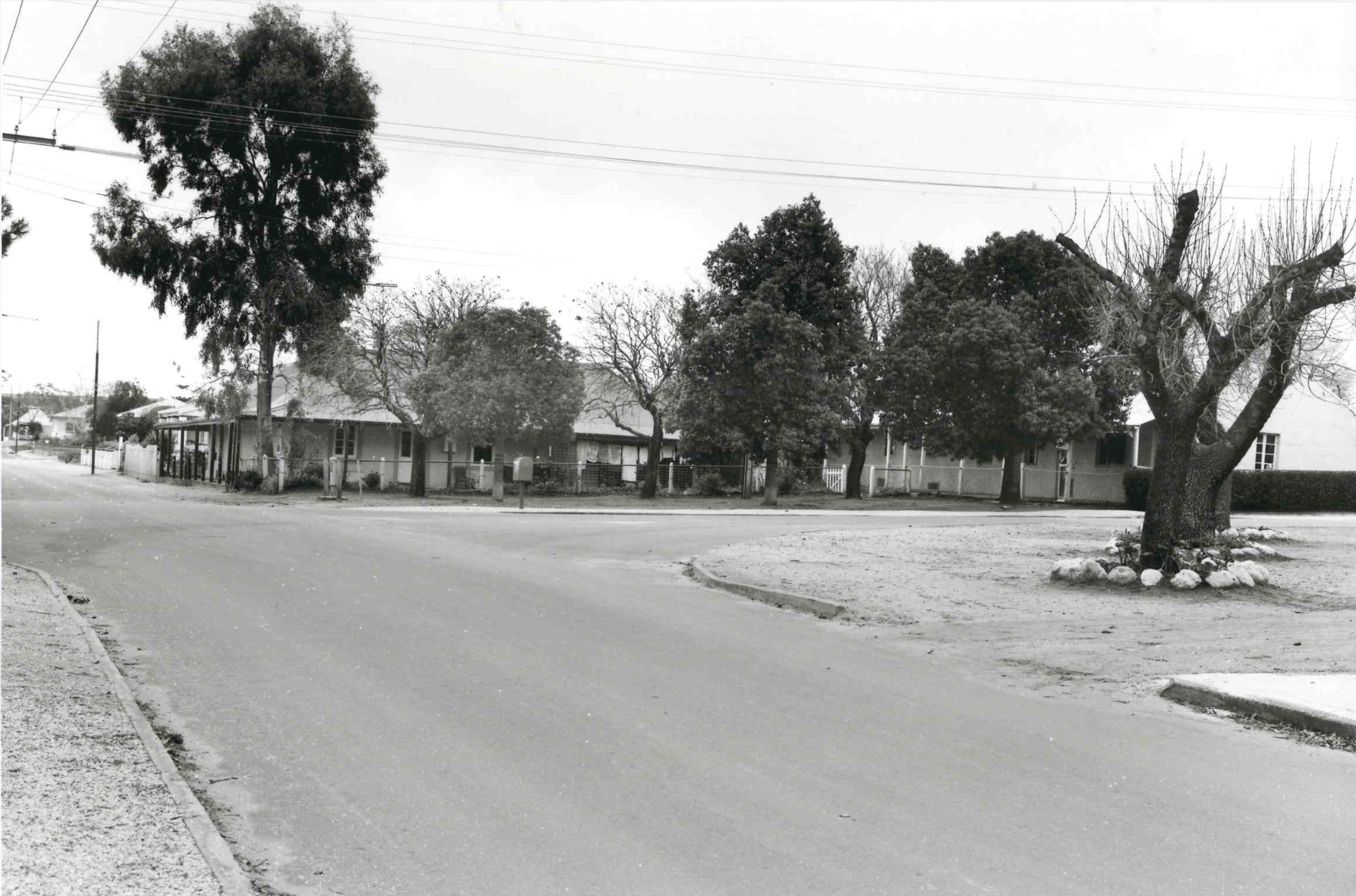
A historical plaque diagonally across the square provides some details of the early history of Goat Square, or Ziegenmarkt as it was known in German. Its name comes from the custom of early settlers of tethering their goats in the square.
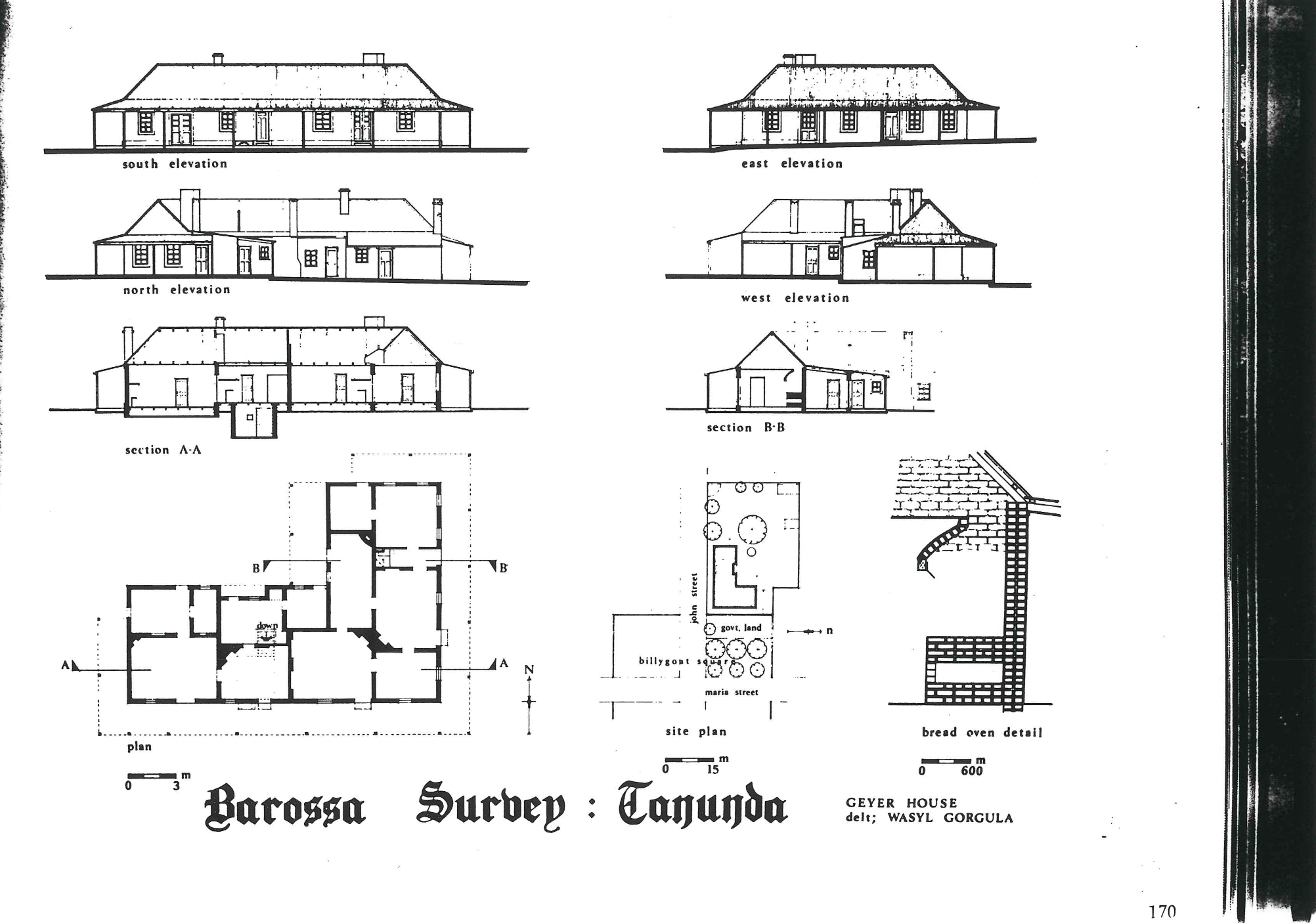
It is almost certain that the house was used for commercial purposes as well as a home. A baker’s oven in remarkably original condition is located between the current sitting room and main bedroom. An external door leading direct into the bakery area is concealed behind the linen cupboard adjacent to the main bedroom door. A smoke room was in the roof.
The location of the house on the original market square would have encouraged commercial use.
The large room now used as a dining room with its separate double door entry from John Street could also have been used as a shop. The likelihood of this is increased by the existence of a large cellar immediately below the room.
Architectural Features
The older section of the house is of typical early stone and pug wall construction with some early brick sections. The main area retains some typically low original plaster and lath ceilings. Two bedroom ceilings are of distinctive narrow pitch corrugated iron.
It also retains many original door and window fittings typical of German houses of similar age. These are mentioned in the Register of the National Estate as being typical of Silesia in the early 19th Century. The door handles in the smaller bedroom on the south-east corner are particularly fine, and even the heavily weathered laundry door has similar fittings.
The rooms are surprisingly large for a house built when South Australia was still less than fifteen years old, suggesting the original owner was a person of substance. Total area of the house exceeds 22 squares or 200 square metres.
The distinctive style of the house is apparently modelled on German country homes of the early part of the nineteenth century, suggesting that the original owner was one of the early Silesian immigrants.
Extensions and Alterations
The date of the extension along John Street (previously Samuel Street) is not known, but the similarities with the basic house in construction and fittings suggest it was an early addition, certainly in the nineteenth century.
It is probable that the exterior rough cast on the walls was added to disguise the differences between older and newer walls, but as yet no investigation has been carried out to see what original treatments were used.
The only wooden floors in the house in August 1995 were in the "new" bedroom and sitting room, and both were the subject of severe termite infestation and had to be removed. Investigation revealed the floors had been laid direct onto the ground when the extensions had been undertaken. The area has been dug out and new Cypress Pine floors installed.
In keeping with the conservation philosophy of retaining as much of the original structure as possible, a small amount of the original flooring was salvaged and used to build the door for the toilet on the old side of the house.
Comparison of the layers of paint on the two sections of the house shows a similar number of layers of the same colours, suggesting that the extension, at least as far as the rear bedroom, was done not long after the house was built.
The colours used in the recent restoration are two colours found when scraping back to identify earlier paint schemes. Originally, the inside walls were done with a white lime wash, typical of the period of construction.
Some modernisation of doors and windows was done to the "new" end of the house in the nineteen seventies when it was used by the Geyer family as an office for their electrical contracting business. Later, it was rented out as self-contained accommodation.
The large rear garden of the house is typical of Barossa settlers with its wide variety of fruit trees providing a level of self-sufficiency. The current garden has pears, apples, apricots, plums, almonds, oranges, lemons, loquats and grapes all bearing profusely in season.
Ownership History
The early history of the house has not yet been revealed, but enthusiastic research is going on via the National Estate Register and Barossa contacts.
One reference in the Mortlock Library has the house passing to the Maywald family in 1867, but no details are yet available.
By 1920, the house was in the Kohlhagen Family, having been registered to Maria Anna Kohlhagen on 10th April 1920. It is possible that Maria street, running to the east of the house, was named after her when the streets were renamed early this century.
The Kohlhagens also occupied 24 Goat Square, the small house diagonally south-east of the Geyer House.
Two Kohlhagen families lived in the house, the family of Les Kohlhagen in the eastern (old) area, and the family including young Lyell in the western (new) end. Lyell now lives in Bilyara Road with his wife Betty.
The house passed from Maria Anna to Bernhard August Kohlhagen under the terms of her will after she died on 26th January 1943, and passed to Amalie Agnes Kohlhagen on 8th May 1943, the day Maria’s will was probated.
The house then was transmitted to Ernest Edwin, Leslie Colin and Vincent Gerald Kohlhagen, executors of Amalie’s will after her death on 16th December 1964.
The house moved to the Geyer family on 3rd November 1965 when it was sold to Florentine Gertrude Geyer an her daughter Aija Irma Lise Geyer. The Kohlhagens maintained an indirect interest via a mortgage on the house until 28th May 1970.
Recent Ownership and Preservation Efforts
The house was offered to the Barossa Archive and Historical Society in 1973 but the sale did not go ahead. The Society owns the adjoining Rieschiek house.
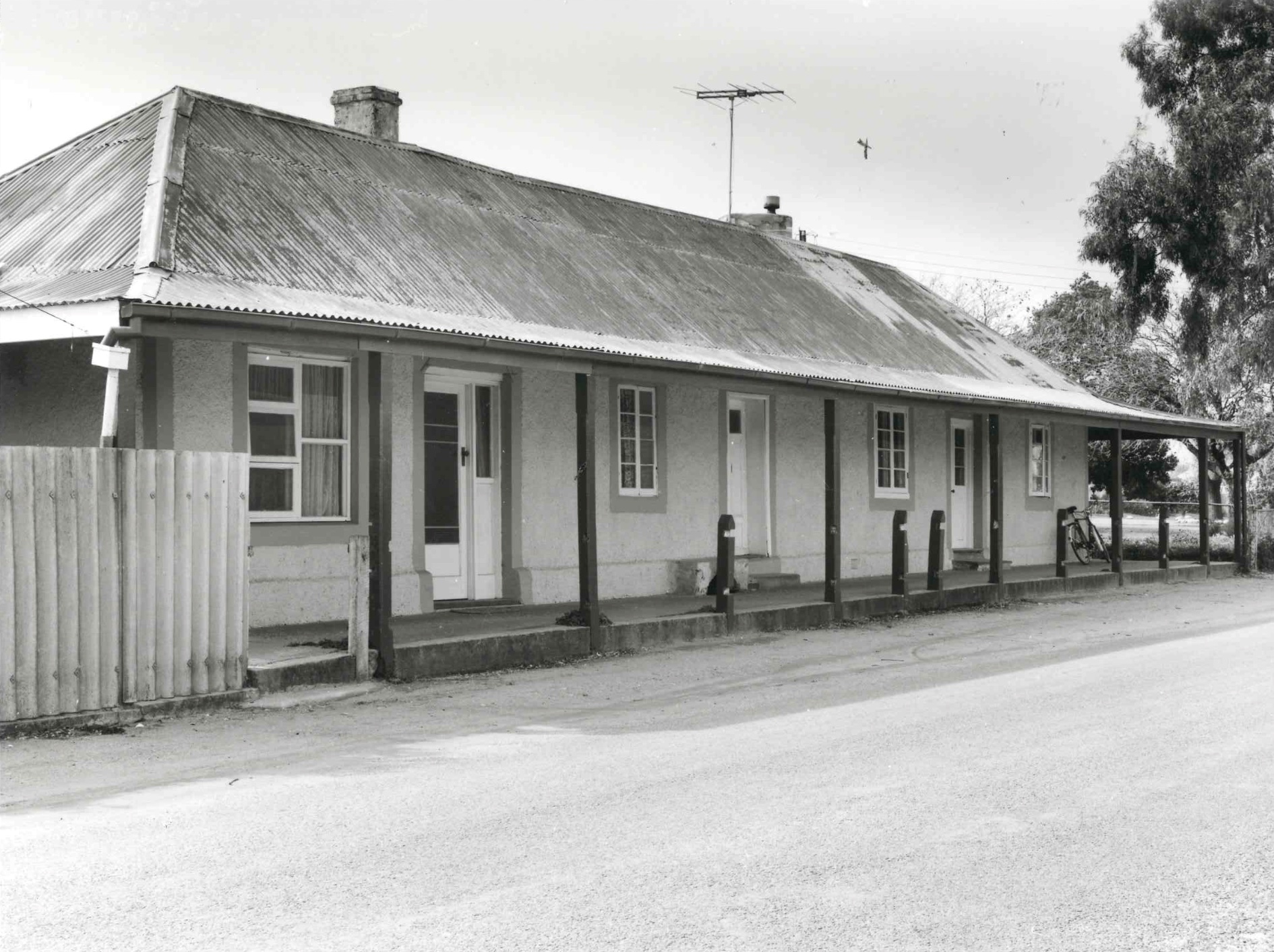
Photographs of the house in 1973 held by the National Trust show it with an orange/red roof and cream fence and posts. The colour of the rough cast and door/window surrounds are not evident in the photographs.
Aija Geyer and her children lived in the main area of the house until 1995, renting the separate western area for income purposes. In 1994, they decided to sell the house in order to move to Gawler where the children attend Trinity College.
The Geyers sold the house to Marilyn and Peter Smith on 25th July 1995, and after detailed consultation with the State Heritage Branch restoration began late in August 1995.
Restoration of the interior of the house and its furnishing with period furniture was completed in less than five weeks, with the house receiving its first Bed & Breakfast guests on 30th September 1995. They included artists and journalists associated with the Barossa Music Festival.
The Barossa is fortunate to have tradesmen experienced in historic house restoration, and the primary contractors working on the house were painter Lyell Rosenzweig and carpenter John Hudson. The electrical renovation was done by Peter Geyer, who was born in the house. Lyell Rosenzweig and Peter Geyer had previously worked with the Smiths in the restoration of “Traut Heim”, a Barossa marble fronted villa at 42 Langmeil Road, Tanunda.
Historic Photos
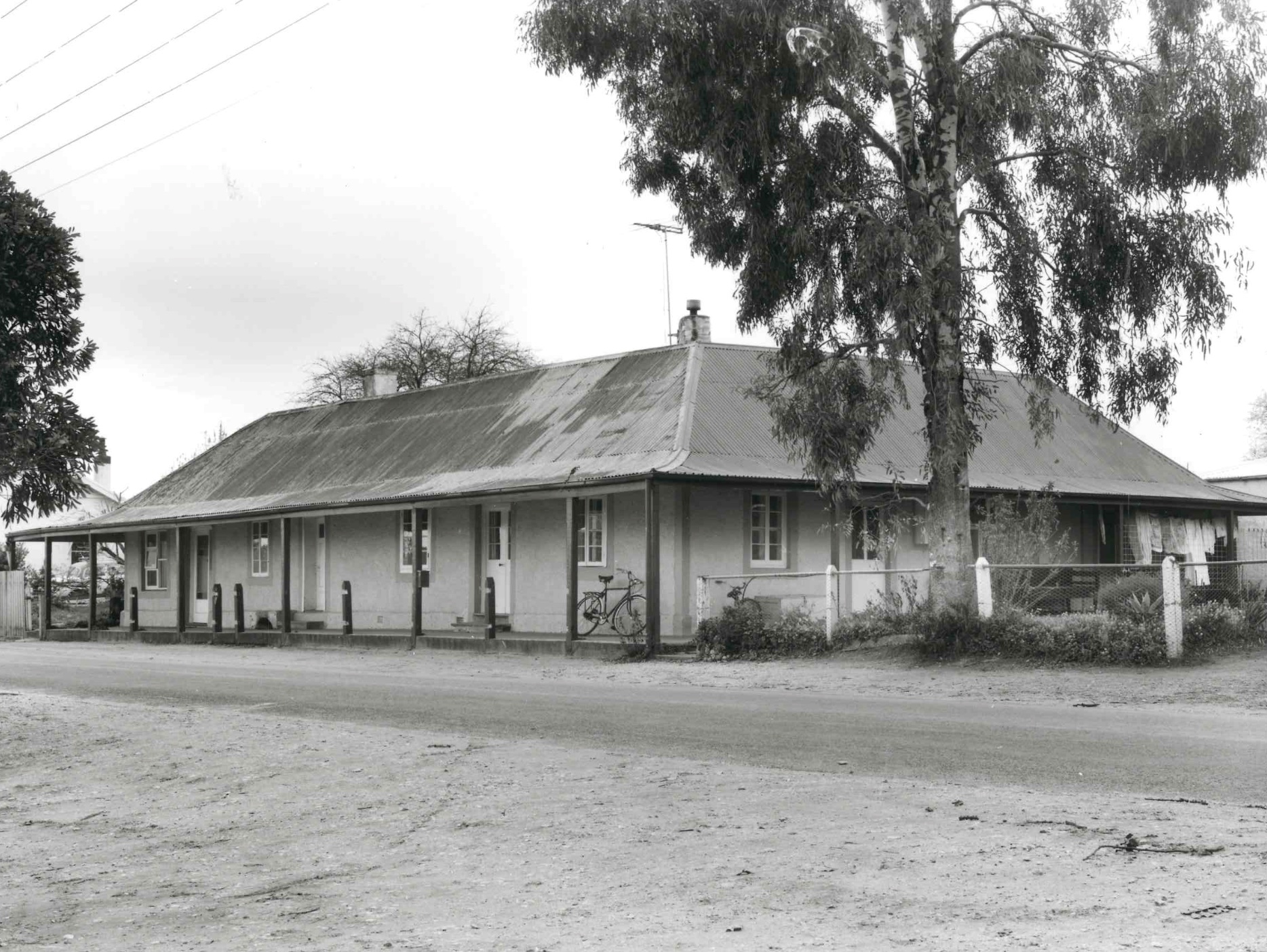
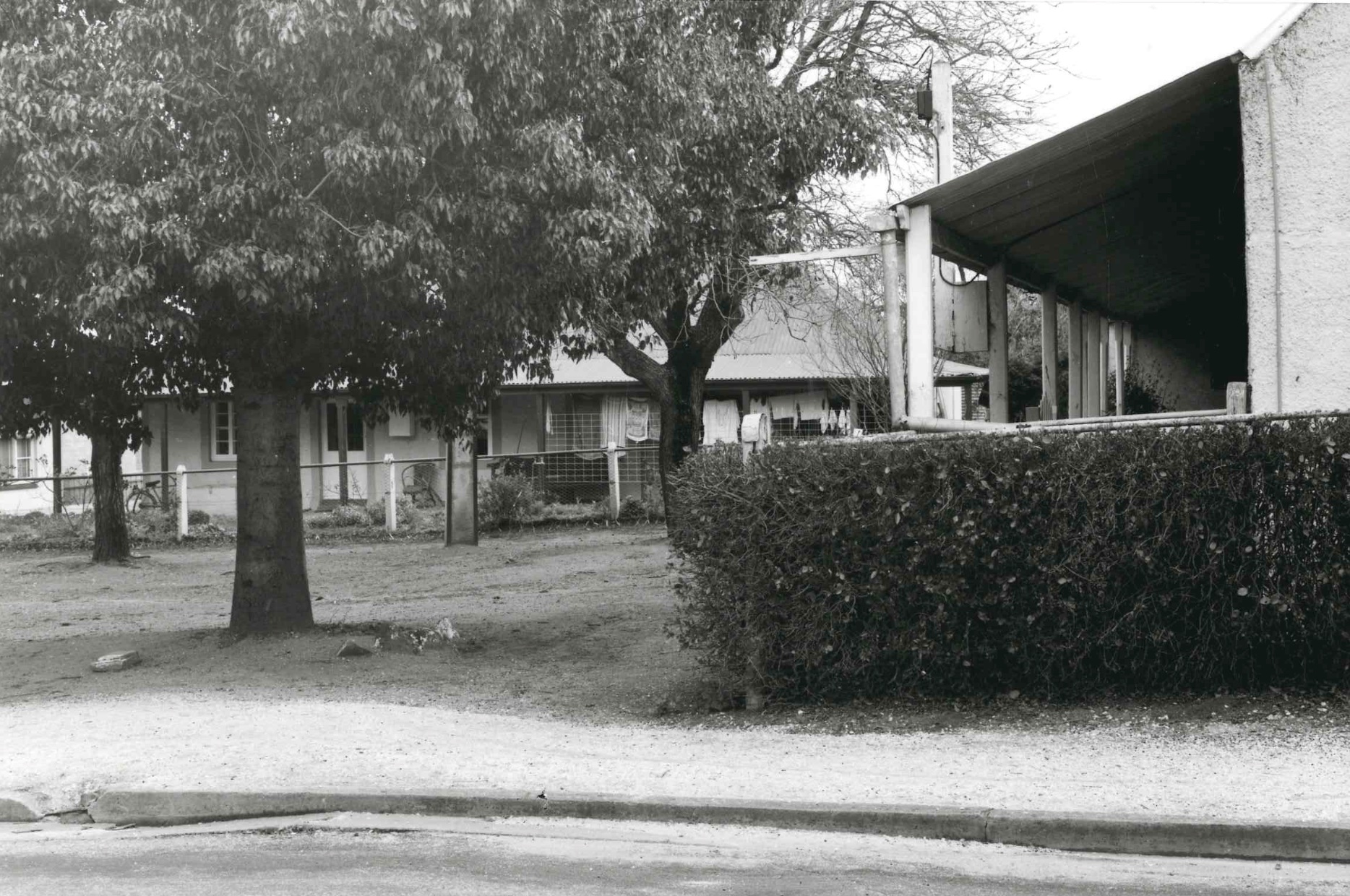
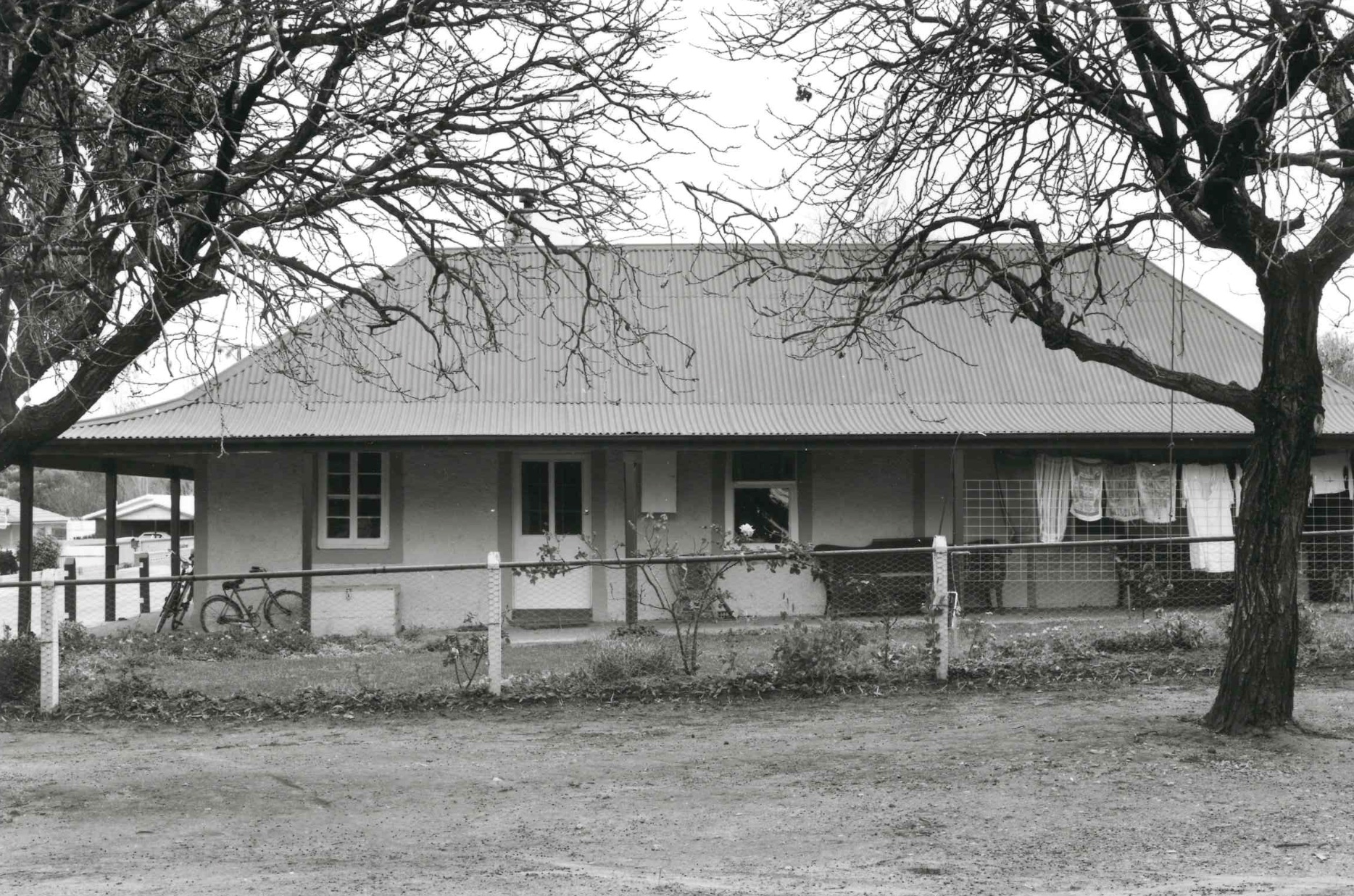
Further Reading and Documentation
To learn more, collated historical documentation of Goat Square House can be found in the Enviro Data SA database, including historic photos, brochures, survey documentation and heritage information of Goat Square House.
Download the PDF from Enviro Data SA below.
Download PDF